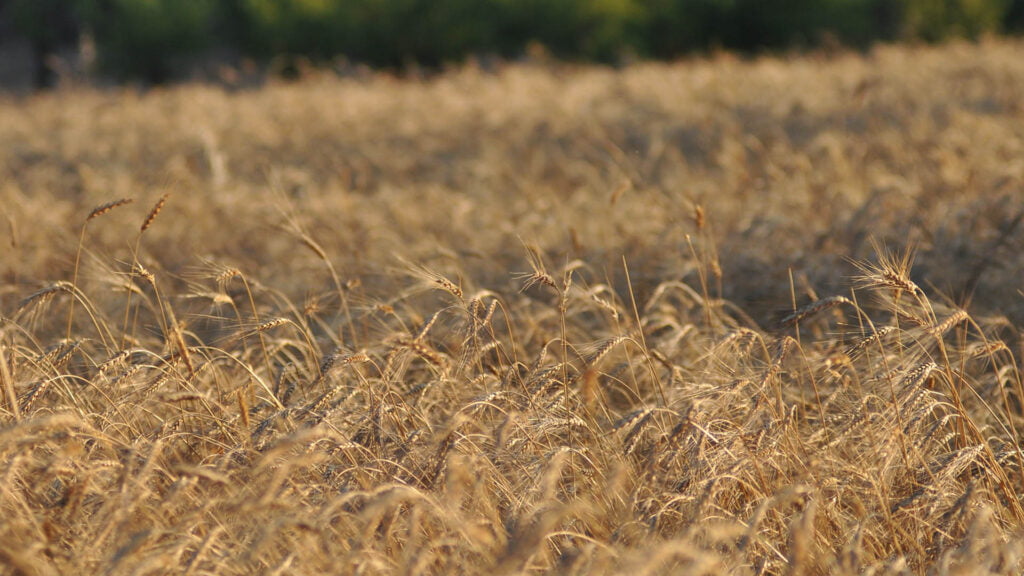
The Timilia is an ancient variety of Sicilian wheat, with which we produce ours durum wheat whole wheat semolina pasta. We asked Doctor Michele Modica to tell us about the sowing of this grain, one of our loyal producers, for which we also produce a pasta line, and we thank him for telling us numerous details of this fascinating and meticulous process.
The seminar some new grain generally starts in November, but the preparation process for this phase begins already in the summer after the harvest, which generally takes place around mid-June. To prepare for sowing, they do "false semine", which consist in working the land just as if it were sowing, and then wait for the first rains. After it rains, weeds will grow, which will be deleted, thus purifying the soil. Doing this process a couple of times will guarantee the ground one good cleaning.
The cultivation of the grains we use to produce our pasta takes place entirely in biological and to ensure a good yield, wheat and legumes are sown in alternate years, these crops once harvested, they come "Overthrown", or ground and scattered on the ground, thus acting as a natural fertilizer. Sun exposure after the harvest period also contributes to the purification of the soil. All these systems, that follow the rhythms of nature, favor the production of organic wheat, without adding any type of additive.
After having worked the soil well, we have to wait for the first rains to be able to sow, in order to facilitate the process of wheat germination. To sow grain often the fertilizer spreader machine is used which simulates the manual sowing process.
When possible, sowing is done with the crescent moon, around the first quarter, moon phase that facilitates the growth process of all that is underground and hidden.
La Timilia o Tumminia, is also called the "Three month wheat" for the possibility of being sown late, a rather early species which is said to complete its cycle in 90 days. In any case, it will be necessary to wait until April / May to see the wheat ripen. Once collected, the grain will be ready to be taken to the mill and ground.
Timilia is coming stone ground, this process takes place at low temperatures, which does not alter the semolina and allows to maintain all the organoleptic characteristics of the product, like vitamins and wheat germ.
The quantities of grain necessary for processing come ground at the moment, the rest is stored in dedicated silos, and ground when needed, to ensure that you always have fresh semolina, from the mill to the pasta factory, ready to be processed and to make a whole durum wheat semolina pasta with a unique taste and exceptional nutritional characteristics.
Credits: https://www.casalemodica.it/